
Where to Sell MTG Cards: Best Options for Cash, Credit, or Convenience
July 25, 2026

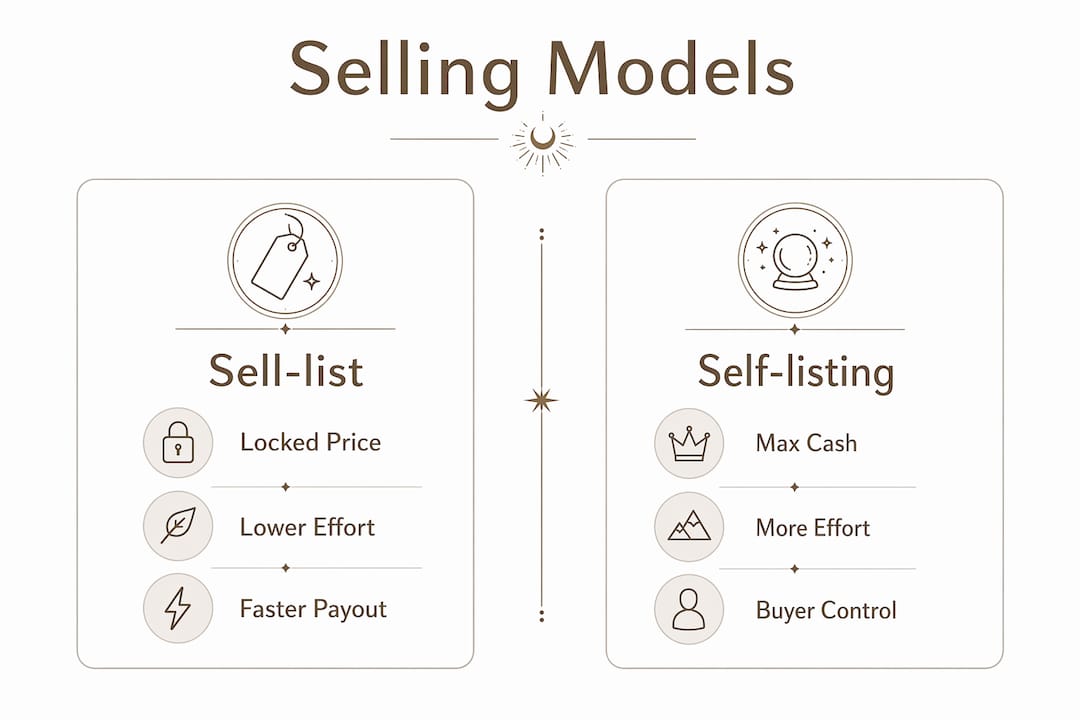
If your primary goal is maximum cash, self-list on TCGPlayer. For the best effective payout when you plan to restock, take store credit at Star City Games — the bonus store credit makes it a higher-value option for active buyers. If you want minimal work, use a Ship+Sell or consignment service and let someone else sort and catalog.
- Maximize cash: Export your collection, list individually on TCGPlayer, and price 5–10% below the lowest listed copy to move cards within a week.
- Get store credit: Build a sell list on Star City Games, lock prices before shipping, and select store credit at checkout for the bonus.
- Minimize effort: Package your collection and ship it to Star City Games Ship+Sell or a consignment service like Card Conduit. Expect a 10% service fee but almost no prep work.
Pro Tip: Before committing to any bulk shipment, demand per-card reporting. A platform that lists each card by name, set, condition, and payout value is the only way to verify you were paid correctly — and to dispute errors without guessing.
Table of Contents
- Where to sell MTG cards: a quick comparison by channel
- How to choose the right place to sell your cards
- How each selling model works and how to prepare your cards
- How Grimoria helps you sell smarter
- Key Takeaways
- The part most sellers get wrong
- Grimoria makes sell-list prep faster
- Useful sources to check before you sell
Where to sell MTG cards: a quick comparison by channel
The table below maps each major selling channel to the dimensions that actually matter when you’re deciding where to move your cards.

| Channel | Best for | Selling model | Fees | Payment options | Effort | Pricing transparency | Buyer reach | Processing time | Safety/shipping |
|---|---|---|---|---|---|---|---|---|---|
| TCGPlayer | Max cash | Self-listing | Seller fees apply | Direct deposit, PayPal | High (list, photo, ship each sale) | Per-listing price control | Very large US buyer pool | Usually quick | Buyer protections; track every package |
| eBay | Rare singles, sealed | Self-listing | Seller fees apply | PayPal, bank transfer | High | Full price control | Massive global reach | Usually quick | Buyer-favored disputes; insure high-value cards |
| Card Kingdom | Store credit or cash | Sell-list/locked price | No seller fee | Store credit or check | Medium (sort, unsleeve, match order) | Per-card report | Large US retailer | Several business days | Ship tracked; unsleeve required |
| Star City Games Sell List | Price certainty | Sell-list/locked price | No service fee | Cash or store credit | Medium | Prices locked before shipping | Large US retailer | Several business days | Ship tracked; unsleeve required |
| Star City Games Ship+Sell | Minimal effort | Consignment/bulk quote | Service fees apply | Cash or store credit | Low | Single quote, not per-card | Large US retailer | Longer; bulk intake | Ship tracked; no itemized list needed |
| Card Conduit | Hands-off consignment | Consignment tiers | Service fees vary | Check or PayPal | Low to medium | Per-card reporting | Marketplace resale | Weeks | Ship tracked; follow intake rules |
| Facebook Marketplace | Local bulk or collections | Local P2P | None | Cash, Venmo, Zelle | Low (meet up) | Negotiated | Local only | Same day | Meet in public; no shipping risk |
| Craigslist | Local bulk | Local P2P | None | Cash | Low | Negotiated | Local only | Same day | Cash only; meet in public |
| Local Game Store (LGS) | Quick cash or credit | In-person buylist | Varies by store | Cash or store credit | Low | Store buylist price | Local | Immediate | Zero shipping risk |
| Reddit r/mtgsales | Direct P2P, singles | Peer-to-peer | None (PayPal fees apply) | PayPal G&S | Medium (list, negotiate, ship) | Seller-set price | Active MTG community | Days | Use PayPal Goods & Services only |
Pro Tip: Always pull the current buylist price AND the TCGPlayer low price for your top 10 cards before committing a bulk shipment. If the buylist is within 15% of TCGPlayer low, the buylist wins on effort alone. If it’s 40% lower, self-listing those cards first is worth the extra hour.
How to choose the right place to sell your cards
The right channel depends on five things: your goal, your card volume, card condition, how you want to be paid, and how much time you’re willing to spend.
Decision criteria to work through first:
- What’s your primary goal — maximum cash, store credit for restocking, or a fast clean exit?
- How many cards are you selling, and what’s the rough value? High-value singles reward self-listing; bulk collections reward consignment.
- What condition are your cards in? Near-mint cards command full buylist prices; played cards may get steep discounts from retailers.
- Do you need cash now, or can you wait weeks for a consignment payout?
- How much time can you invest? Self-listing 200 cards on TCGPlayer takes hours; shipping a box to Ship+Sell takes 20 minutes.
Questions to ask any platform or buyer before you ship:
- Do you lock prices, or can they change after I ship?
- What are your exact fees and any per-card handling charges?
- Is store credit a higher effective payout than cash?
- What’s your current processing time for my volume?
- What are your unsleeving and sorting requirements?
- Do you provide a per-card report showing name, set, condition, and payout?
Red flags that should stop you from shipping:
- No line-item reporting — you’ll never know what you were actually paid per card.
- Vague processing-time answers (“we’ll get to it when we can”).
- Requests to ship without tracking or insurance on anything over $50.
- Payment methods with no buyer protection (Venmo Friends & Family, Zelle for strangers).
- No written confirmation of prices before you ship.
How each selling model works and how to prepare your cards
Sell-list (locked price)
You browse a retailer’s buylist, add cards to a sell cart, and submit the order to lock prices before you mail anything. Card Kingdom requires cards to be unsleeved and sorted to match the sell order exactly. Star City Games Sell List works the same way and charges no service fee for sale List orders. This model suits sellers who want price certainty and don’t mind sorting.
Ship+Sell (consignment/bulk quote)
You ship your collection without building an itemized list. The buyer catalogs everything and sends a single quote or processes per-card. Star City Games Ship+Sell charges a 10% service fee (dropping to 5% for orders over $10,000). Card Conduit offers tiered options with fees around 5–10% depending on the service level, plus small per-card fees on curated tiers. Low effort, but lower net payout.
Self-listing on a marketplace
You list each card individually on TCGPlayer or eBay, set your own price, and ship to each buyer. TCGPlayer’s seller portal includes inventory import and mobile image recognition to speed up uploads. Highest potential cash, but the most work per card.
Local P2P and in-person
Facebook Marketplace, Craigslist, your LGS, and Reddit r/mtgsales all let you sell without shipping. LGS buylists are usually lower than online retailers, but you walk out with cash or credit the same day. Reddit r/mtgsales has an active community and seller reputation system — always use PayPal Goods & Services, never Friends & Family.
Preparing your cards: a quick workflow
Condition grading: Sort cards into Near Mint, Lightly Played, Moderately Played, and Heavily Played before building any sell list. Retailers grade on intake and will adjust your payout if your condition call is off.
Unsleeving and binder removal: Sleeved or bindered cards increase processing time and can trigger handling fees. Remove every card from sleeves and binders before packing.
Photography and scanning: For rare or valuable cards, photograph both faces under good light before shipping. This documents condition and is your only evidence if a dispute arises.
Packing and shipping: Use a rigid box or padded mailer with a top-loader or card sleeve for high-value singles. Add tracking on every shipment; add insurance for anything over $100. Include your name and a copy of the confirmation email inside the package.
Rare and valuable cards: For cards worth $100 or more, consider separate insured shipments and a prior grading or authentication consultation before selling. Document provenance with photos and any purchase receipts.
| Selling model | Typical prep time | Processing time | Payout timing |
|---|---|---|---|
| Sell-list (Card Kingdom / SCG) | 1–3 hours sorting | Several business days | Check or credit within days of approval |
| Ship+Sell (SCG) | 20–30 minutes packing | Longer; bulk intake queue | Quote sent after intake; payout follows |
| Consignment (Card Conduit) | 30 minutes packing | Weeks (marketplace resale) | After cards sell through |
| Self-listing (TCGPlayer/eBay) | Hours per batch | Immediate listing | Per-sale, days after shipment |
| Local / LGS / Reddit | Minimal | Same day to days | Immediate (cash) or days (PayPal) |
Pro Tip: Use a mobile scanning app or Grimoria’s camera-based card scanner to digitize a stack of 50 cards in minutes. Once you have a digital list with current TCGPlayer and CardMarket prices, it takes about 10 minutes to identify which cards are worth self-listing versus bulk-shipping.
How Grimoria helps you sell smarter
Preparing a sell list manually is the part most sellers skip — and then regret when they realize they bulk-shipped a $40 card for $8. Grimoria removes that friction.
- Camera scanning: Point your phone at a card and Grimoria identifies it instantly, pulling current prices from TCGPlayer and CardMarket.
- Collection and sell-list management: Build a dedicated sell list from your collection, flag cards by condition, and export it as a CSV to paste directly into a retailer’s buylist tool.
- Price tracking and history: Spot price spikes before they pass. If a card spiked last week, you’ll see it in the price history and can decide whether to hold or list now.
- Deck and binder export: If you’re breaking down a deck, export the full list and cross-reference it against current buylists in one step.
A practical seller flow: scan your collection with Grimoria’s camera tool → build a sell list → compare the TCGPlayer low price against the Card Kingdom or Star City Games buylist price → decide which cards to self-list and which to bulk-ship → export the sell list and submit.
Key Takeaways
The single most important decision when selling MTG cards is matching your selling model to your goal: self-list for maximum cash, use a locked sell-list for price certainty, or ship to a consignment service when time matters more than yield.
| Point | Details |
|---|---|
| Match model to goal | Self-list on TCGPlayer for max cash; use a sell-list for price certainty; Ship+Sell for minimal effort. |
| Store credit bonus | Star City Games offers up to a 30% bonus in store credit — worth it if you plan to buy more cards. |
| Demand per-card reporting | Any platform that won’t give you a line-item report is one you can’t verify or dispute. |
| Unsleeve before shipping | Sleeved or bindered cards cause processing delays and can reduce your net payout at most retailers. |
| Grimoria for prep | Scan your collection, compare buylist vs. marketplace prices, and export a sell list before you ship anything. |
The part most sellers get wrong
The conventional wisdom says “just use TCGPlayer for everything.” That’s fine advice if you have 20 cards and enjoy listing. It falls apart fast when you have 400 cards, half of them bulk commons, and a realistic picture of how long individual listing actually takes.
The smarter move is a hybrid: identify your top 15–20 cards by value, self-list those on TCGPlayer or eBay where the margin difference justifies the work, and bulk-ship the rest to a consignment service or sell-list retailer. You capture most of the upside without spending a weekend on data entry.
Store credit is also consistently underused. If you’re an active player who buys singles regularly, up to a 30% store credit bonus at Star City Games is a real return that cash can’t match. The catch: confirm the credit applies to what you actually want to buy, whether that’s singles, sealed product, or accessories, before you select it as your payout.
Grimoria makes sell-list prep faster
Before you ship a single card, knowing what you have and what it’s worth is the job. Grimoria is built for exactly that: scan your collection with your phone’s camera, pull live prices from TCGPlayer and CardMarket, and build an export-ready sell list in minutes rather than hours.
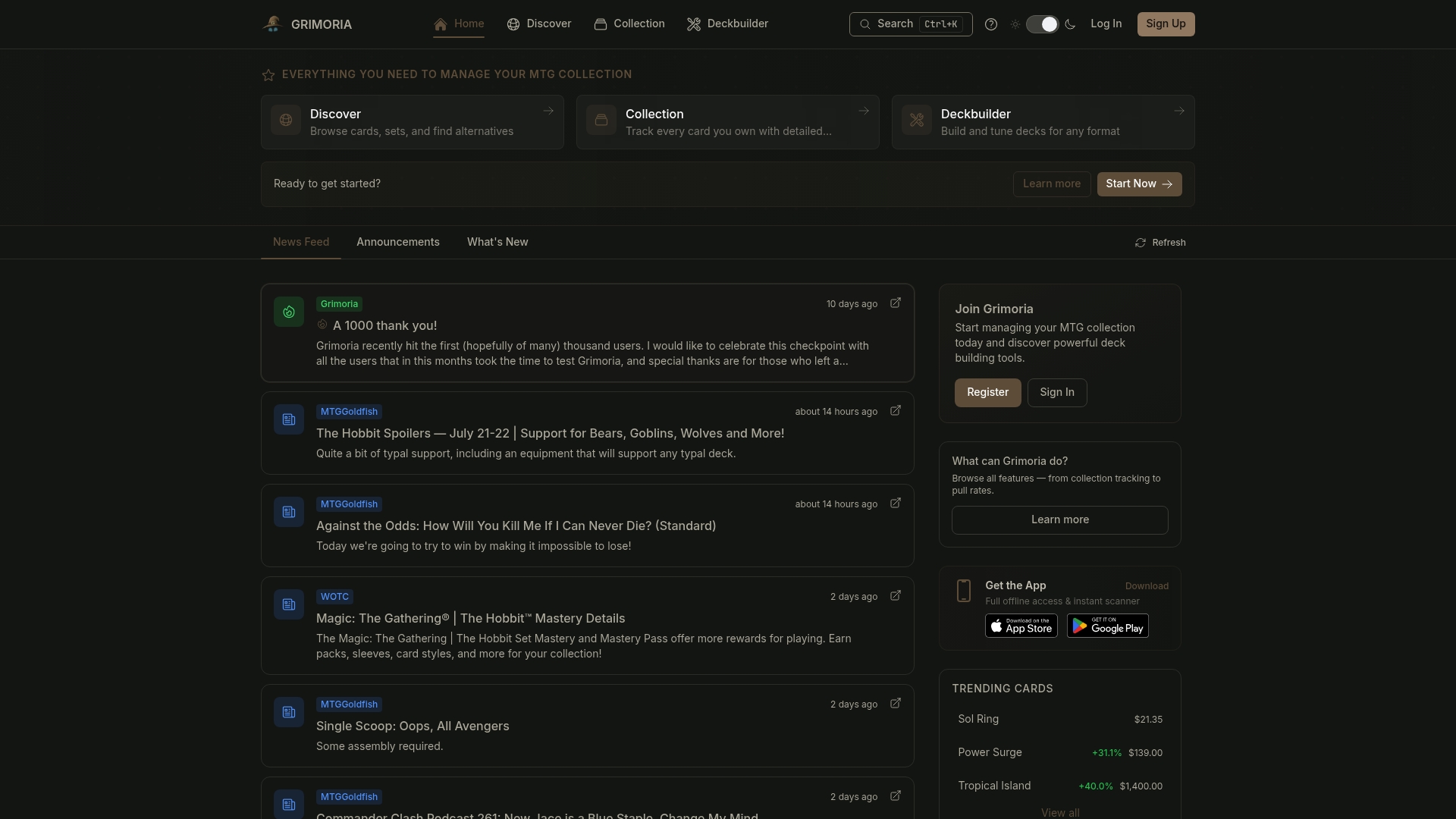
Once your list is ready, compare the buylist offer against the marketplace low price inside the app. Cards where the gap is small go to the bulk shipment. Cards where self-listing pays significantly more get listed individually. That one step routinely saves sellers from underselling their best cards.
Start building your sell list on Grimoria — it’s free, and the price-tracking tools alone are worth the five minutes it takes to scan your first stack.
Useful sources to check before you sell
Before shipping anything, verify the current rules directly on each provider’s page. Policies, fees, and processing times change.
- Star City Games Sell List and Ship+Sell: Check current buylist prices, store credit bonus percentage, and Ship+Sell fee tiers. Confirm whether the store credit bonus applies to your card types.
- Star City Games selling help: Covers all five selling methods including in-person appointments at their Roanoke, VA location and event vendor booths.
- Card Kingdom sell page: Review the current sell order workflow, unsleeving requirements, and any notices about paused bulk purchasing services before building your order.
- Card Kingdom MTG singles buylist: Browse current per-card buylist prices before committing to a sell order.
- TCGPlayer seller marketplace: Review seller fees, inventory import options, and the mobile image recognition tool for faster listing.
- Card Conduit: Compare service tiers (Auto-Sifted, Curated, and full-service), fee structures, and per-card reporting details before choosing a consignment option.
Always read the buyer’s specific shipping and condition requirements before packing. A missed unsleeving rule or an incorrect condition grade is the fastest way to lose value on a shipment you spent an hour preparing.