
The 10 Best MTG Deck Building Tools in 2026
July 23, 2026

There are more Magic: The Gathering deck builders and collection trackers than ever, and they’ve specialized: some are brilliant editors, some are research databases, some are scanners. No single tool wins at everything, so the honest way to compare them is by what each one is best for. Here are the ten worth knowing in 2026.
1. Grimoria
Best for: Collection + decks + budget alternatives in one place
Full disclosure: Grimoria is our tool, so judge this entry accordingly. We built it because deck builders and collection trackers were always separate apps. Grimoria combines a camera card scanner, collection management with binders and deck boxes, a deck builder with format validation, wishlists with price alerts, and daily TCGplayer and Cardmarket prices — free, on web, iOS, and Android, with offline support.
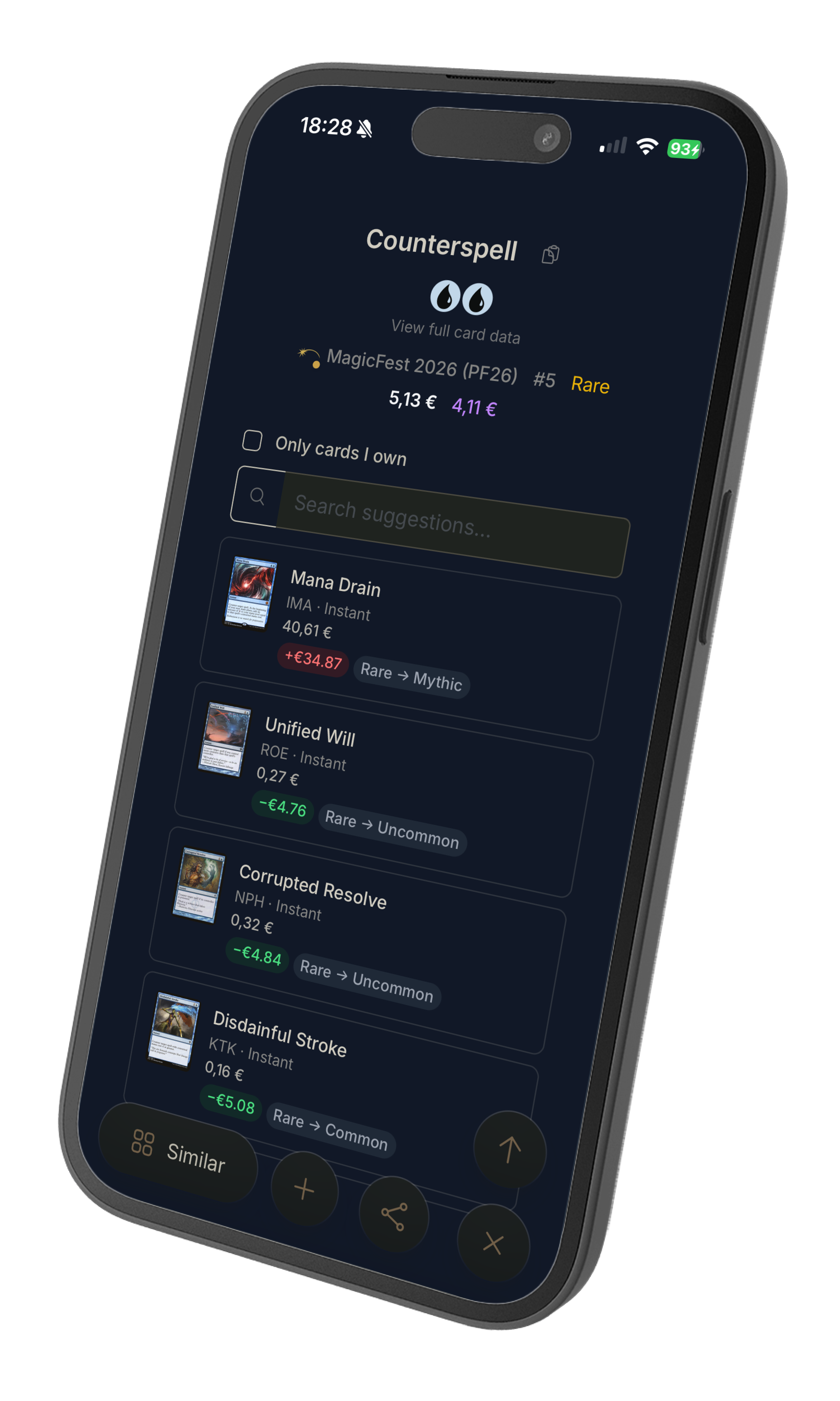
Its most distinctive feature is the similarity engine: for any expensive card it suggests budget-friendly alternatives based on mechanics and gameplay patterns, which is invaluable when tuning a deck to a price point or upgrading a Commander precon.
2. Moxfield
Best for: The all-round deck editor most players use
Moxfield is the current default for deck building: a fast, clean editor, solid playtesting tools, deck primers, and a huge public deck database. Its collection features are serviceable but secondary — most players pair it with a dedicated tracker. If you mainly want to write and share lists, it’s hard to beat.
3. Archidekt
Best for: Visual deck building with categories
Archidekt’s card-image-first editor with drag-and-drop categories (ramp, removal, draw…) makes deck structure visible at a glance, which is great for Commander where you’re balancing packages. Price tracking and collection integration are built in, and its category system is the best in class for analyzing why a deck works.
4. EDHREC
Best for: Commander deck research and recommendations
EDHREC isn’t a deck editor — it’s the data layer for Commander. Aggregating hundreds of thousands of decks, it shows you what cards are most played with any commander, theme, or combo. Brew with it open in another tab, then build the actual list in your editor of choice.
5. MTGGoldfish
Best for: Metagame data and budget deck lists
MTGGoldfish tracks metagame shares across competitive formats, publishes budget versions of top decks, and maintains long-running price history. It’s more a research site than a builder, but for answering “what’s good in Modern right now, and what does it cost?” it’s the first stop.
6. Scryfall
Best for: Card search — the engine behind everything else
Scryfall is the definitive card search engine, with a query syntax powerful enough to express almost any card question (t:creature o:"draw a card" cmc<=2 c:g). Most tools on this list, ours included, build on its data. Every deck builder should learn basic Scryfall syntax — it pays off daily.
7. ManaBox
Best for: Mobile-first scanning and collection tracking
ManaBox made camera scanning mainstream on mobile: point your phone at cards, build a collection, and track deck lists on the go. Deck building is lighter than the desktop-oriented tools, but as a phone-native scanner and tracker it set the standard many apps now chase.
8. TopDecked
Best for: Competitive players who playtest on mobile
TopDecked focuses on the competitive workflow: deck building with legality checks, goldfishing and playtesting, metagame data, and tournament tools like life tracking, all in a polished mobile app. Some advanced features sit behind a subscription.
9. TappedOut
Best for: Community deck feedback
One of the longest-running deck sites, TappedOut’s strength has always been its community: post a list and get real feedback and upgrade suggestions in the comments. The interface shows its age next to newer editors, but the deck archive and discussion culture remain valuable.
10. Delver Lens
Best for: High-volume scanning on Android
Delver Lens is a dedicated Android scanner known for speed and accuracy with large boxes of cards, exporting to CSV and other trackers. If your immediate problem is “I have 20,000 unsorted cards,” it’s a strong first step in the pipeline — scan there, manage anywhere.
Which one should you pick?
Most players end up with a stack: a search engine (Scryfall), a research source (EDHREC or MTGGoldfish), and an editor/tracker. If you’d rather have collection, decks, prices, scanning, and budget suggestions in one free app, that consolidation is exactly what we built Grimoria to do — and since every tool here imports and exports lists, trying one costs nothing.
Frequently asked questions
What is the best free MTG deck builder?
Moxfield is the most popular free deck builder, and Archidekt is the strongest visual alternative. If you also want collection tracking, a card scanner, and budget alternative suggestions in the same free tool, Grimoria combines all of those with deck building for Commander and other formats.
Which deck building tool is best for Commander (EDH)?
EDHREC is essential for Commander research thanks to its recommendation data, while Moxfield and Archidekt are the most used editors. Grimoria adds Commander-specific features like precon upgrade guides, bracket estimation, and budget alternatives for expensive staples.
Can I move my decks and collection between tools?
Yes. Nearly all major tools exchange plain-text deck lists, and most collection trackers import and export CSV. Grimoria imports collections and decks from Moxfield, Archidekt, and ManaBox exports, and lets you export your data at any time.
Building out your physical collection too? Read our step-by-step collection organization guide.