
How to Organize Your MTG Collection: A Step-by-Step Guide
July 23, 2026

Every Magic player hits the same wall: the shoebox. Cards pile up from drafts, precons, and boosters until finding a specific card means twenty minutes of digging. The fix isn’t one heroic sorting weekend — it’s a system you can actually maintain. Here’s the one we recommend, step by step.
Step 1: Decide what your collection is for
How you organize depends on why you collect. A deck builder wants fast access by color and function. A set collector wants completion tracking. An investor wants condition and price history. Most players are a mix, but pick your primary goal — it decides every choice below.
Step 2: Triage — separate value from bulk
Before sorting anything, split your cards into two piles: cards worth more than roughly $1, and everything else. This single pass matters more than any sorting scheme, because the two piles get completely different treatment. The value pile earns sleeves, binders, and individual cataloging. The bulk pile gets boxes and rough counts.
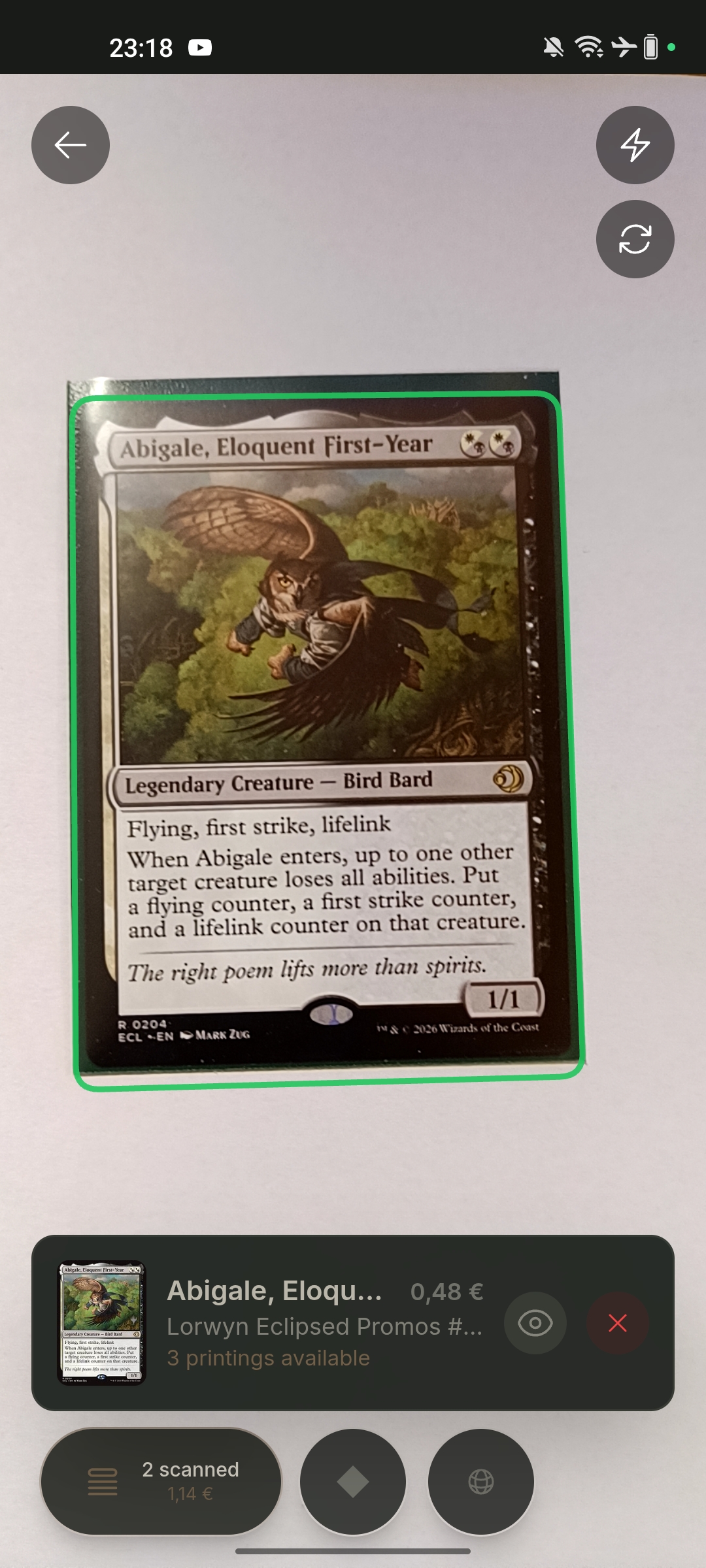
Not sure what’s worth money? Scan cards with a collection app with a camera scanner as you triage — you’ll catch the surprise $8 uncommon that looks like bulk.
Step 3: Choose physical storage
- Binders with side-loading pockets for your value pile and trade targets. Side-loaders keep cards from falling out and look presentable at trade tables.
- Cardboard storage boxes (800–5,000 count) for bulk, with dividers. Label the outside — future you will thank you.
- Deck boxes for built decks. Cards in decks are part of your collection too; track them, don’t lose them.
- Sleeves and toploaders for anything you’d be upset to damage. Humidity and sunlight are the real enemies — store boxes somewhere dry and dark.
Step 4: Pick a sorting order you can maintain
The best sorting system is the one you’ll keep up with after every draft night. The common options:
- Color → type → name: best for deck builders. “I need a cheap green ramp creature” maps directly to a physical location.
- Set → collector number: best for set collectors and resellers, and it matches how buylists and price pages are organized.
- Alphabetical: fastest lookup if you already know the card name, but miserable to insert into as the collection grows.
A pragmatic hybrid: bulk sorted by color and type, value binder sorted by set. Whatever you choose, don’t over-sort — sorting bulk commons alphabetically is hours of your life you won’t get back.
Step 5: Catalog everything digitally
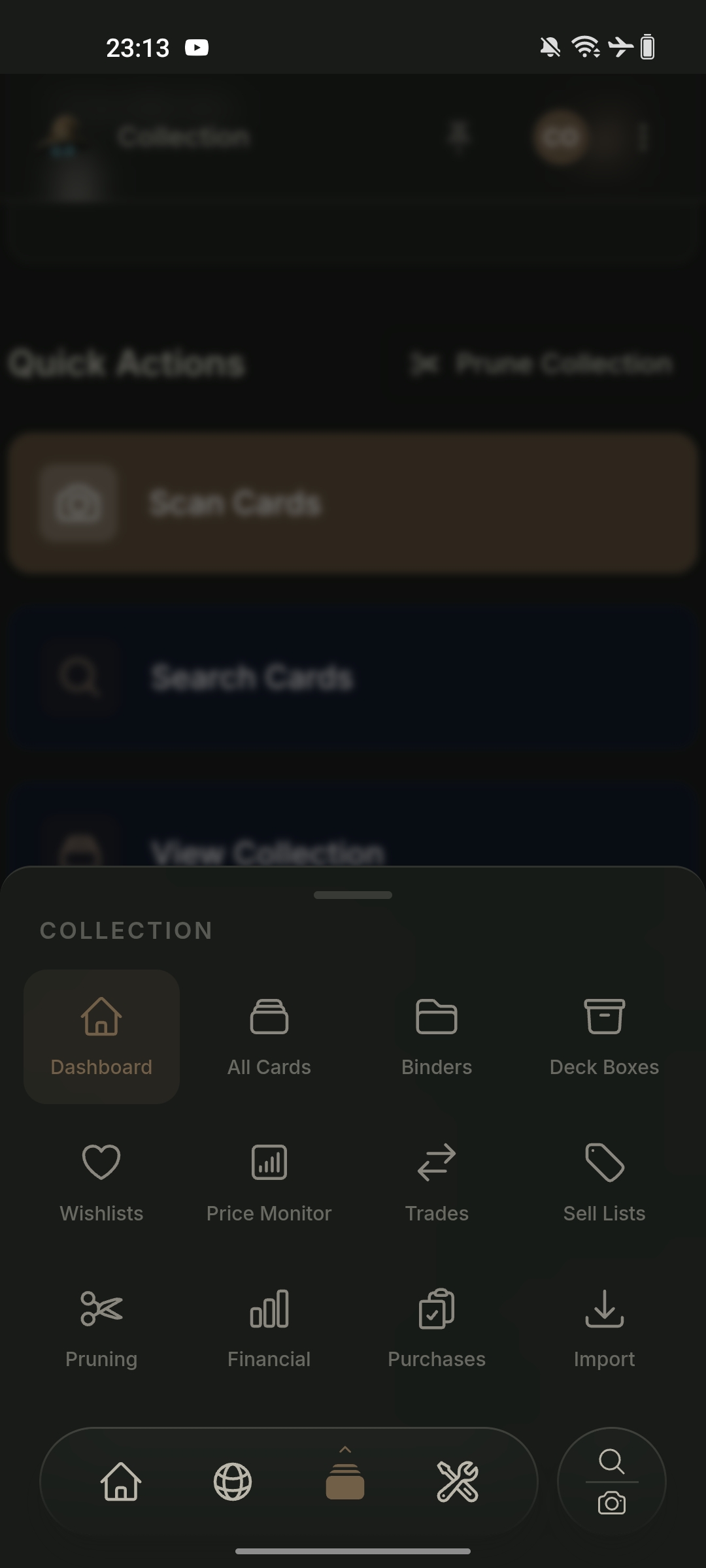
A digital catalog is the difference between “I think I own that” and knowing in two seconds. It’s also the only realistic way to know your collection’s value, track what’s in which deck, and check ownership from your phone at a store. This is exactly what Grimoria was built for: scan cards with your camera, organize them into virtual binders and deck boxes that mirror your physical ones, and search everything instantly — free, on web, iOS, and Android, and it works offline.
Already have a spreadsheet or use another tracker? Import it via CSV (Moxfield, Archidekt, and ManaBox exports work) instead of starting over.
Step 6: Track value, not just cards
Once cataloged, your collection becomes a portfolio. Live prices tell you when a bulk rare from three years ago spiked to $15, what your collection is actually worth for insurance, and whether that trade is fair. Grimoria tracks daily prices from TCGplayer and Cardmarket and shows value changes over time on a financial dashboard.
Step 7: Build the maintenance habit
Systems die from neglect, not design. Three habits keep yours alive:
- Process new cards immediately. After a draft, scan and sort the same week — a “to sort” pile is the shoebox reborn.
- Update when cards move. Deck built? Card traded? Reflect it in the catalog right away.
- Do a light quarterly pass. Re-check what counts as “value” — prices move, and cards migrate between bulk and binder.
Frequently asked questions
What is the best way to organize a large MTG collection?
Separate valuable cards from bulk first, store value cards in binders and bulk in labeled boxes, then catalog everything digitally with a collection app so you can search by name instead of digging through boxes. Sorting bulk by color and card type is usually faster to maintain than sorting by set.
Should I sort my MTG cards by set or by color?
Sort by color (then card type) if you build decks often — that matches how you search when brewing. Sort by set if you collect complete sets or plan to resell, since buyers and price guides are organized by set. Many players use color for bulk and set for their binder of valuable cards.
How do I know how much my MTG collection is worth?
Catalog your cards in a collection tracker that pulls live market prices. Grimoria, for example, values each card using daily TCGplayer (USD) and Cardmarket (EUR) prices and totals your collection automatically, including foil and printing differences.
How long does it take to catalog an MTG collection?
With a camera scanner, most players catalog 500–1,000 cards per hour. A 10,000-card collection is realistically a weekend project if you scan the valuable cards individually and add bulk commons as counts rather than one by one.
New to the idea of tracking a collection digitally? Start with our introduction to MTG collection management, or see how the popular tools compare in our deck building tools roundup.