
What Is MTG Collection Management? A Complete Introduction
July 23, 2026

Magic: The Gathering has printed tens of thousands of unique cards over three decades, and an active player accumulates thousands of them without trying. Collection management is everything you do to stay in control of that accumulation: knowing what you own, keeping it organized and protected, understanding what it’s worth, and putting it to work in decks.
The four pillars
1. Inventory tracking
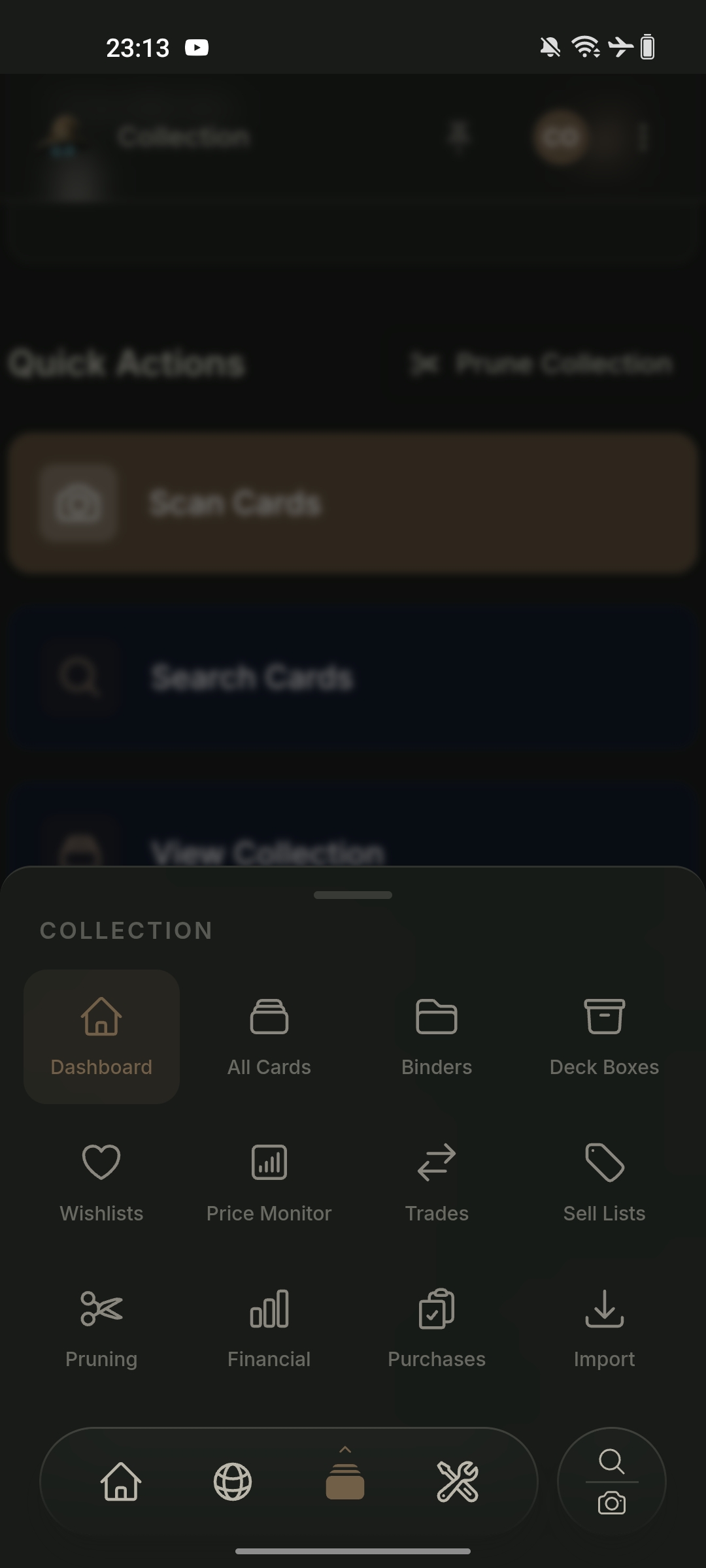
The foundation is a searchable record of every card you own — including printing, language, condition, and whether it’s foil, since a card’s exact printing can change its value tenfold. Modern apps make this fast with camera scanning: point your phone at a card and it’s identified and added in a second.
2. Physical organization
Binders, boxes, sleeves, and a sorting system that lets you find any card quickly. The digital catalog and physical layout should mirror each other — when the app says a card is in “Trade Binder,” that’s exactly where your hands find it. Our step-by-step organization guide covers this in depth.
3. Valuation
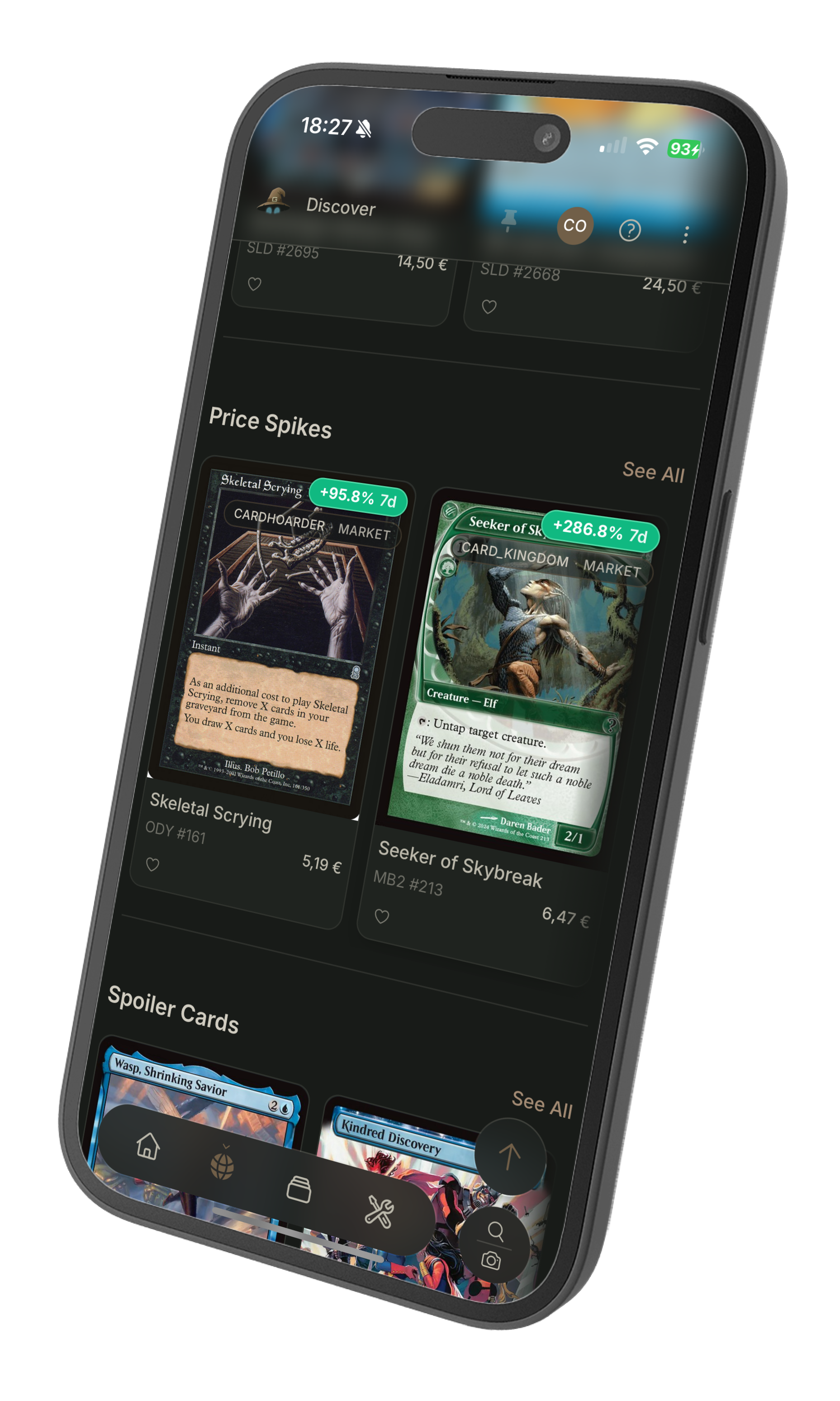
Cards are assets with moving prices. Good collection management means knowing your collection’s total value, seeing which cards spiked or sank, and tracking what you paid versus what cards are worth now. This matters for trades, insurance, and deciding when to sell.
4. Deck integration
A collection exists to play with. The final pillar connects inventory to deck building: which of your decks a card sits in, whether you can build a list from what you own, and what the missing cards would cost — ideally with cheaper alternatives suggested when a staple is out of budget.
From shoebox to software
Players have managed collections with three generations of tools. Memory and shoeboxes work until roughly the thousandth card. Spreadsheets add searchability but rot quickly: no live prices, no scanning, typo-prone names, and no link to decks. Dedicated apps are the current generation — they validate cards against a full database, pull daily market prices, scan physically, and treat decks and wishlists as part of the same inventory.
What should a modern collection manager give you? Camera scanning, live prices in your currency, binders and deck boxes that mirror physical storage, wishlists with price alerts, import/export so your data is never locked in, and search across everything. This is the checklist we built Grimoria against — free, on web, iOS, and Android, with offline support and budget alternative suggestions on top.
Who actually needs this?
- Casual and kitchen-table players — mainly to avoid re-buying cards they own and to build decks from their actual collection.
- Commander players — juggling many 100-card singleton decks makes “which deck is my copy in?” a daily question.
- Competitive players — track playsets across formats and the cost of the next deck.
- Collectors and investors — condition, printings, and price history are the whole game.
Getting started in an afternoon
Don’t catalog everything at once. Start with your decks and your obviously valuable cards — that usually captures most of your collection’s worth in an hour or two of scanning. Add binders next, then decide how much of the bulk deserves individual entries. From there it’s maintenance: scan new cards as they arrive and let the running total take care of itself.
Frequently asked questions
What does collection management mean in MTG?
MTG collection management is the practice of tracking which cards you own, organizing them physically, monitoring their market value, and connecting your inventory to deck building — so you always know what you have, where it is, and what it is worth.
Do casual players need a collection tracker?
Once a collection passes a few hundred cards, yes — even casual players benefit. A tracker prevents buying cards you already own, surfaces the value hiding in your bulk, and answers "can I build this deck with what I have?" in seconds.
What is the best app to manage an MTG collection?
The right app depends on your needs, but look for camera scanning, live prices from TCGplayer and Cardmarket, deck integration, and easy import/export. Grimoria offers all of these for free on web, iOS, and Android, with offline support.
Is a spreadsheet good enough to track an MTG collection?
A spreadsheet works for small collections, but it cannot update prices, scan cards, validate names, or tell you which decks a card is in. Most players who start on spreadsheets migrate to a dedicated app once their collection or deck count grows.
Ready to go deeper? See how the ecosystem’s tools compare in our deck building tools roundup, or jump straight into the organization guide.