
MTG Rarity Symbols Explained: Colors, Letters and More
July 31, 2026
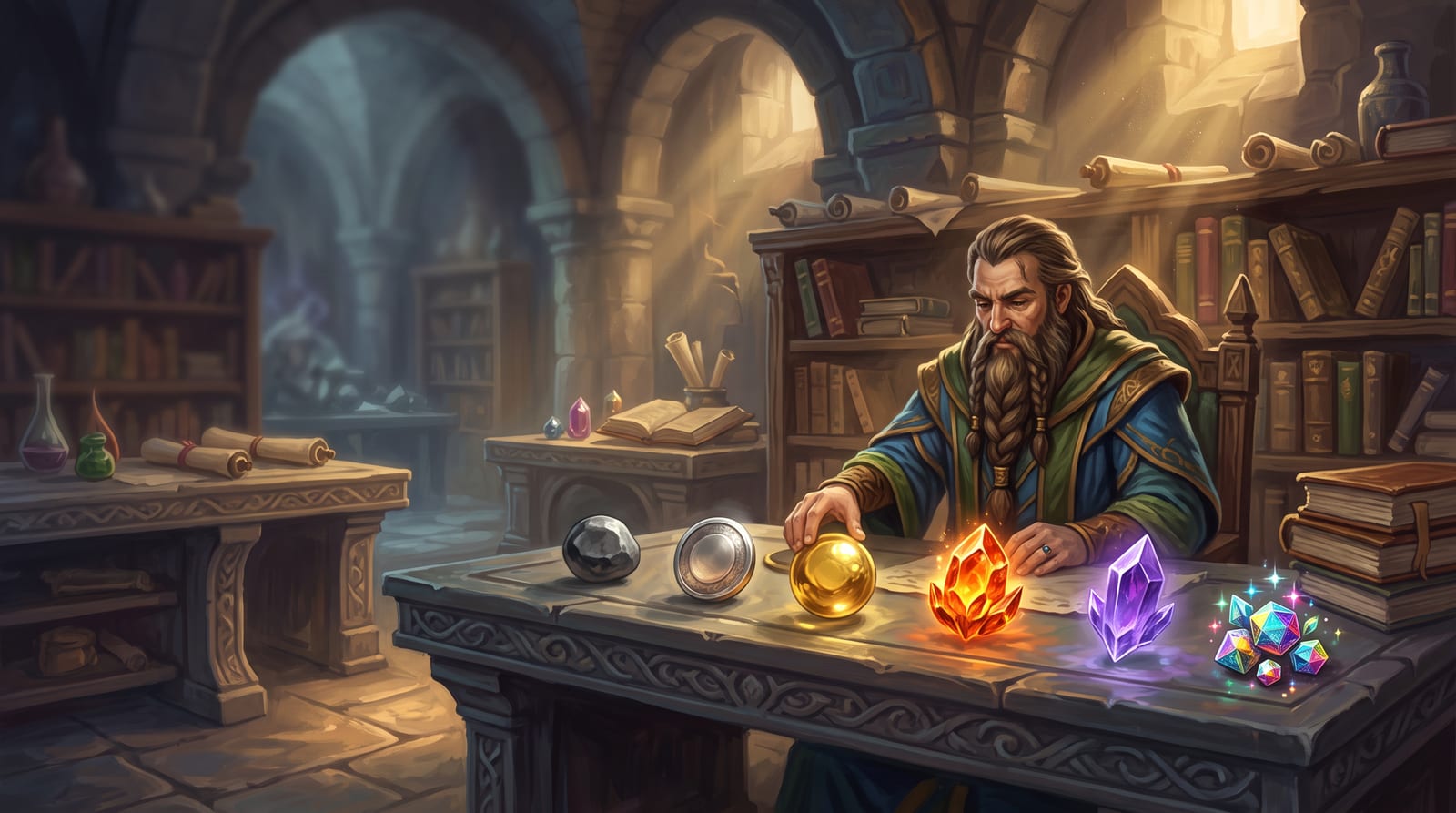
What a Magic card's rarity symbol is actually telling you
Every Magic: The Gathering card has a small icon printed to the right of its illustration, on the same line as the card's type. That icon is the expansion symbol, and its color is what most players mean when they talk about MTG rarity symbols. It tells you how often that card shows up in a booster pack. Nothing about power level, nothing about price, just print frequency.
The color-coded system goes back to 1998's Exodus, the first set to print rarity in color instead of a single black symbol for every card. Wizards added a fifth tier, mythic rare, a decade later with Shards of Alara in 2008. Every set since has followed the same four-color logic, with a couple of genuine oddballs mixed in.
The four core MTG rarity symbols
Here's the full breakdown, color by color.
| Color | Rarity | What it means |
|---|---|---|
| Black | Common | The most frequently printed cards in a set. They make up the largest share of any booster, roughly half to two-thirds depending on the product, so they form the backbone of Limited decks. |
| Silver | Uncommon | Printed less often than commons but still easy to open multiples of across a few packs. Uncommons usually carry a bit more text or a build-around ability. |
| Gold | Rare | The headline slot in most boosters. One rare or mythic rare fills it per pack, with rare being the more common of the two outcomes. |
| Orange-red | Mythic rare | The scarcest of the four standard tiers, reserved for a smaller subset of a set's rare-slot cards, usually its splashiest legends, Planeswalkers, or build-arounds. |
Worth repeating: the color tells you print frequency, not power level. A mythic rare can be a build-around that never sees play outside Commander, and a common can be a format staple. More on that below.
Reading the rarity letter next to the collector number
Modern cards also spell rarity out in text, at the bottom left next to the collector number. Look for a single letter: C for common, U for uncommon, R for rare, or M for mythic rare. It's the fastest way to confirm rarity when you're scanning a stack of cards and don't want to squint at symbol colors under bad lighting.
A couple of cards break the pattern on purpose. Basic lands carry common rarity in the card database, even though many players don't think of them that way. Cards pulled from The List, Wizards' rotating pool of reprints seeded into Play Boosters, show a small Planeswalker icon instead of their original set's expansion symbol, but they keep whatever rarity they were originally printed at.
The outliers: purple timeshifted cards and the "bonus" rarity
Two rarities exist outside the usual four, and you'll only run into them on a small handful of cards.
Purple marks a "special" rarity that Wizards used on the 121 Timeshifted cards in 2006's Time Spiral. Those cards reprinted classics in the old pre-2003 card frame and sat outside the set's normal rare and mythic slots entirely, effectively a bonus tier rarer than rare. The purple symbol resurfaced in 2021 for Time Spiral Remastered's own throwback cards, which reuse the same old-border treatment as a nostalgia nod to the original set. Wizards' own "Purple Reign" article covers the original design reasoning.
Bonus rarity is even narrower. It belongs to exactly nine cards, the Power Nine reprinted in 2014's Vintage Masters, marked with a glowing, embellished version of the mythic symbol. In Scryfall's own card database, bonus outranks mythic rare for scarcity, since it was assigned to one iconic, extremely limited print run and never used again.
Does a higher rarity mean a stronger or pricier card?
No, and this is where a lot of newer players get tripped up. Rarity measures how often a card was printed, not how good it is at the table or how much it costs on the secondary market.
Lightning Bolt is uncommon and has been a format staple in Modern, Legacy, and Pauper for decades. Meanwhile plenty of mythic rares from any given set never make a competitive deck and end up in bulk boxes within a year of release. Older Reserved List cards, regardless of their original rarity, can quietly cost more than a brand-new mythic, purely because they were never reprinted and demand has outlasted a shrinking supply.
If you're trying to work out what a specific card is actually worth right now, rarity is a starting point at best. Checking current market prices, and knowing where you can actually move a card, matters a lot more. Our guide to where to sell MTG cards walks through the options once you know what you're holding.
Using rarity when you manage a real collection
Once you can read a symbol at a glance, rarity turns into a genuinely useful sorting tool instead of trivia.
If you're building out a binder, grouping by rarity first and set second makes rares and mythics easy to find when someone asks to trade or buy. Our guide to organizing your MTG collection covers a few layout systems that work well for exactly this.
Booster odds also shift by product these days. Play Boosters, Set Boosters, and Draft Boosters all handle the rare and mythic slot a little differently, and the flat "one mythic in eight packs" figure you'll see quoted everywhere isn't a safe assumption across every product anymore. Grimoria's pull-rates tool pulls the real per-set numbers so you know what you're actually opening before you buy a box, and the set browser lets you scan a full checklist by rarity to see what you're still missing.
Frequently asked questions
What color is a mythic rare symbol in MTG?
Mythic rare symbols are orange-red. Wizards added the mythic tier with Shards of Alara in 2008, sitting one step above rare. The same color has been used consistently on every set printed since, along with the letter "M" next to the collector number on modern card frames.
Why do some Magic cards have a purple symbol?
A purple symbol marks Wizards' "special" rarity, used only for Time Spiral's 2006 Timeshifted cards and their 2021 Time Spiral Remastered throwbacks. Both use the old pre-2003 card frame and sit outside a set's normal rare and mythic slots, making them a genuine bonus tier rather than a fifth standard rarity.
Does a rare MTG card mean it's valuable?
Not necessarily. Rarity reflects how often a card was printed, not its playability or market price. Plenty of rares and mythics end up in bulk boxes, while some commons and uncommons from older, unreprinted sets sell for far more because real demand has outlasted a shrinking supply.
What does the letter next to a card's collector number mean?
On modern card frames, a single letter at the bottom left, next to the collector number, spells out rarity in text: C for common, U for uncommon, R for rare, or M for mythic rare. It's there so you can confirm rarity without relying on symbol color, which can be hard to judge under poor lighting.
How many mythic rares are in a booster pack?
It depends on the product and set. Older-style boosters generally replaced the rare slot with a mythic in roughly one pack out of every seven or eight, but Play Boosters and Set Boosters use different odds per release. Check a specific set's real pull rates rather than leaning on an old rule of thumb.
Next time you're sorting a stack of cards, the color and the letter will tell you everything you need at a glance. If you want the exact rarity breakdown and pull rates for a specific set before you crack a box, Grimoria's set browser has the full checklist waiting.