
MTG Trade Binder Guide: What to Include and How to Sort It
August 1, 2026
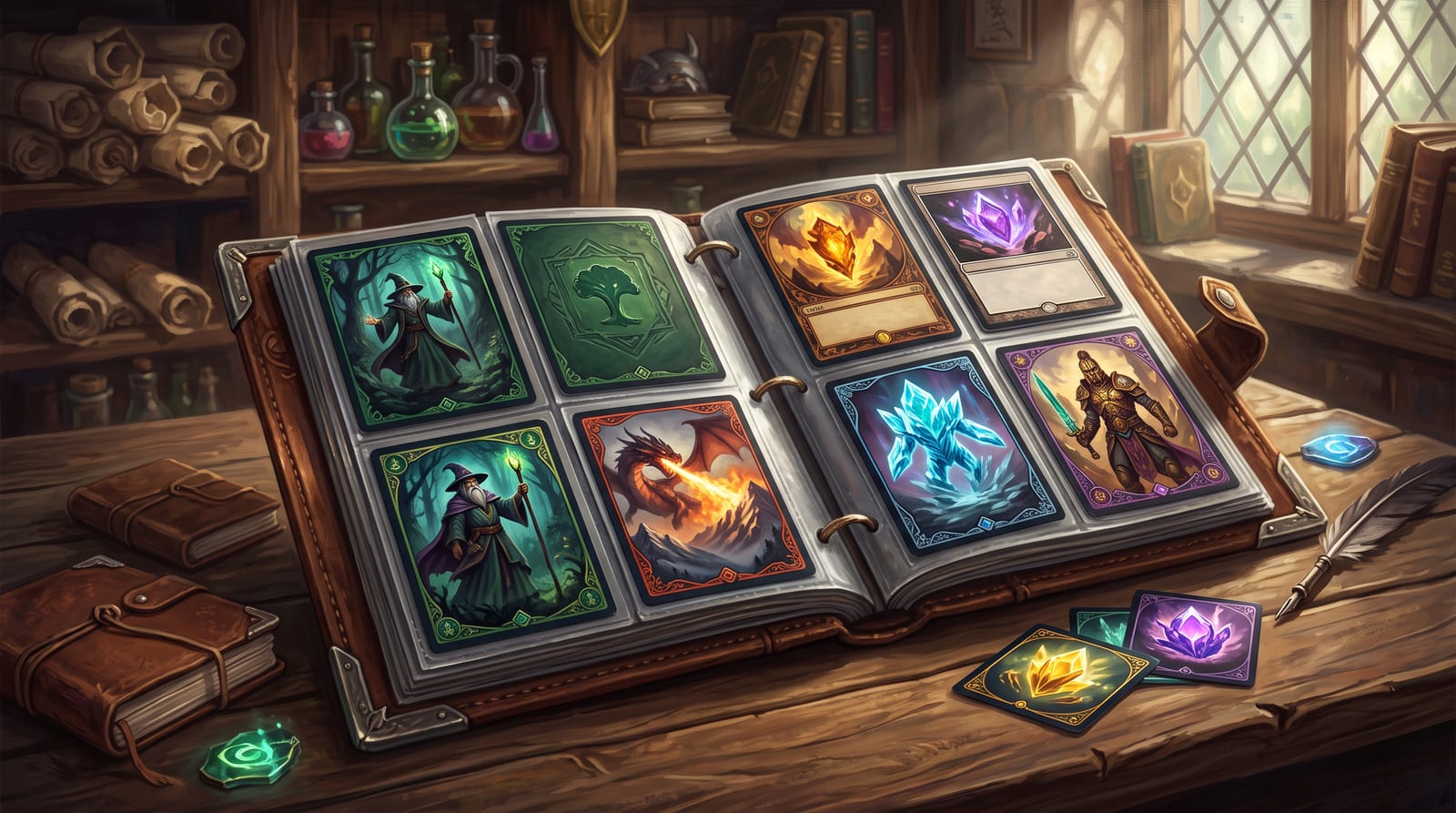
A good MTG trade binder is a filter, not a museum. It should hold the cards someone else at the table actually wants, priced close to what they're really worth, and organized so a stranger can flip through it in under two minutes. Here's what to put in, what to leave out, and how to sort it so trades actually happen.
What actually belongs in an MTG trade binder
Most trading guides converge on the same floor: skip anything worth less than about a dollar. Below that, a card is bulk, and bulk clogs pages without giving anyone a reason to stop and look. Above that line, your binder should lean toward whatever is currently playable, not whatever is old.
A solid mix looks like this:
- Format staples from Standard, Pioneer, Modern, and Commander that see actual play, since those move fastest.
- Foils and etched treatments of anything popular, even commons and uncommons, because cosmetic upgrades trade well against other cosmetic upgrades.
- Recent rares and mythics that haven't settled into a stable price yet, which is exactly when other players are most eager to grab them.
- Commander staples that show up across dozens of decklists, since Commander tables trade constantly and those cards are almost always wanted somewhere.
Leave out anything you'd regret losing. Playtest cards, judge promos, and sentimental pulls don't belong in a binder that leaves your bag. If a card is a build-around for a deck you're actively playing, keep it out no matter what it's worth. A trade binder full of cards you secretly hope nobody asks for isn't a trade binder, it's a decoy.
Sort it so people actually stop and look
Organization matters more than most new traders expect. A binder sorted by nothing in particular gets a quick flip and a shrug. A binder someone can scan by color or price gets a real look, and a real look is what leads to a trade.
By color and rarity
The classic system: five color sections, then artifacts and lands, with rarity descending within each section so the eye-catching mythics sit up top. It mirrors how most players already think about their decks, so nobody has to learn your filing system to use it.
By price tier
Group cards into rough bands, a dollar to five, five to twenty, twenty and up, and mark the breaks with a divider or a sticky tab instead of writing prices on sleeves that go stale in a week. Some traders put their best cards up front to signal they're serious about big trades. Others bury them in the middle so a browser has to look through everything, which tends to produce more small trades along the way. Either works. Pick one and stay consistent, since a binder that changes logic every few pages is harder to trust than one that's merely sorted the "wrong" way.
If your binder is carrying real money, a lot of traders split it in two: a bulkier 9-pocket binder for the dollar-to-twenty range, and a smaller 4-pocket or zippered binder for anything above that. The bigger pages hold more inventory per trip. The smaller one is easier to keep an eye on and doesn't advertise your expensive cards to the whole room the moment you open it.
Pricing without guessing every card from memory
Prices move constantly, and a binder priced from memory or from a sticker you wrote three months ago will either scare off trades or quietly lose you money. Before a trade session, pull current market numbers from a live source like Scryfall rather than trusting what a card cost the last time you checked.
This is where a lot of binders fall apart in practice. Nobody wants to look up forty cards individually before heading to a store or a Commander night. If you already track your collection digitally, batch-checking prices for everything tagged as tradeable takes a few seconds instead of an evening, and it catches the cards that quietly jumped in value since you last looked, which are exactly the ones you don't want to trade away for less than they're worth. If you're not tracking prices at all yet, it's worth reading up on what collection management actually covers before your next binder rebuild.
Keep the binder in sync with your digital collection
The physical binder is only half the system. The other half is knowing, before you even open it, which cards in your collection are worth pulling for trade this week and which ones a specific person you're meeting is actually looking for.
Grimoria's collection and binder tools let you tag cards as tradeable, keep a live wishlist of what you're hunting for, and see at a glance when something in your binder matches something a friend needs, all without re-scanning your whole collection by hand. Price alerts flag when a card in your binder has moved enough to be worth reconsidering before you trade it away. It's the same idea as the physical two-binder split, applied to your whole collection instead of just the pages in your bag. You can build and check that list from the Grimoria app on your phone before you even leave the house.
If you haven't set up a digital system yet, our guide on how to organize your MTG collection covers the groundwork, tagging, storage, and sorting, that makes the trade binder step much faster.
When a card doesn't belong in the binder at all
Not everything worth money should go to a trade table. Genuine chase cards, anything that's spiked hard and might keep moving, and cards nobody at your usual playgroup is likely to want are often better sold outright than shopped around a binder for weeks. If a card would take three trades to convert into something you actually need, selling it once and buying what you want directly is usually faster and cleaner. Our breakdown of where to sell MTG cards covers the main options if a piece is better off leaving your collection entirely.
Trade binder etiquette that keeps people coming back
A binder is also a reputation. A few habits separate traders people seek out from ones they avoid:
- Quote the same price source you'd want quoted back to you, and say which one you're using.
- Be upfront about condition. A card described as near mint that shows up lightly played kills trust fast.
- Don't lowball a mythic-for-mythic swap just because both cards happen to share a rarity slot. Values inside the same rarity can differ by a wide margin.
- Sleeve anything above a few dollars individually, even inside the binder pocket. A scuffed corner turns a fair trade into an argument.
Frequently asked questions
What cards should I keep out of my trade binder?
Leave out anything worth less than roughly a dollar, since it rarely interests anyone and just adds bulk. Also skip cards you'd regret losing, staples for a deck you're actively playing, and judge promos or playtest cards that shouldn't leave your collection in a trade at all.
Should I organize my binder by color, price, or set?
Either color or price works well; the key is picking one system and staying consistent. Color mirrors how most players already think about decks, while price tiers make it easy to steer a trade toward a specific value range. Sorting by set mostly helps only if you're trading with other set collectors.
Is a 9-pocket or 4-pocket binder better for trading?
9-pocket pages hold more cards per trip and work well for your bulkier dollar-to-twenty range. 4-pocket or zippered binders are better for higher-value cards since they're easier to watch closely and don't put your best pulls on display the moment the binder opens.
How do I know what a card in my binder is worth right now?
Check a live pricing source like Scryfall or a collection app that pulls current market data before you trade, rather than relying on a sticker price or memory. Prices on recent rares and mythics especially can shift within days.
Is it still worth trading if I could just sell the card?
Trading makes sense when you want a specific card back rather than cash, and it's often faster for mid-value cards both sides actually want. For genuine chase cards or anything spiking hard, selling outright and buying what you need directly is usually cleaner than shopping it around a binder for weeks.
Ready to stop pricing your binder from memory? Add your tradeable cards to Grimoria's collection and set a wishlist so you know exactly what to bring and what to grab in return next time you sit down to trade.