
MTG Card Condition Guide: How to Grade NM to Damaged
August 17, 2026
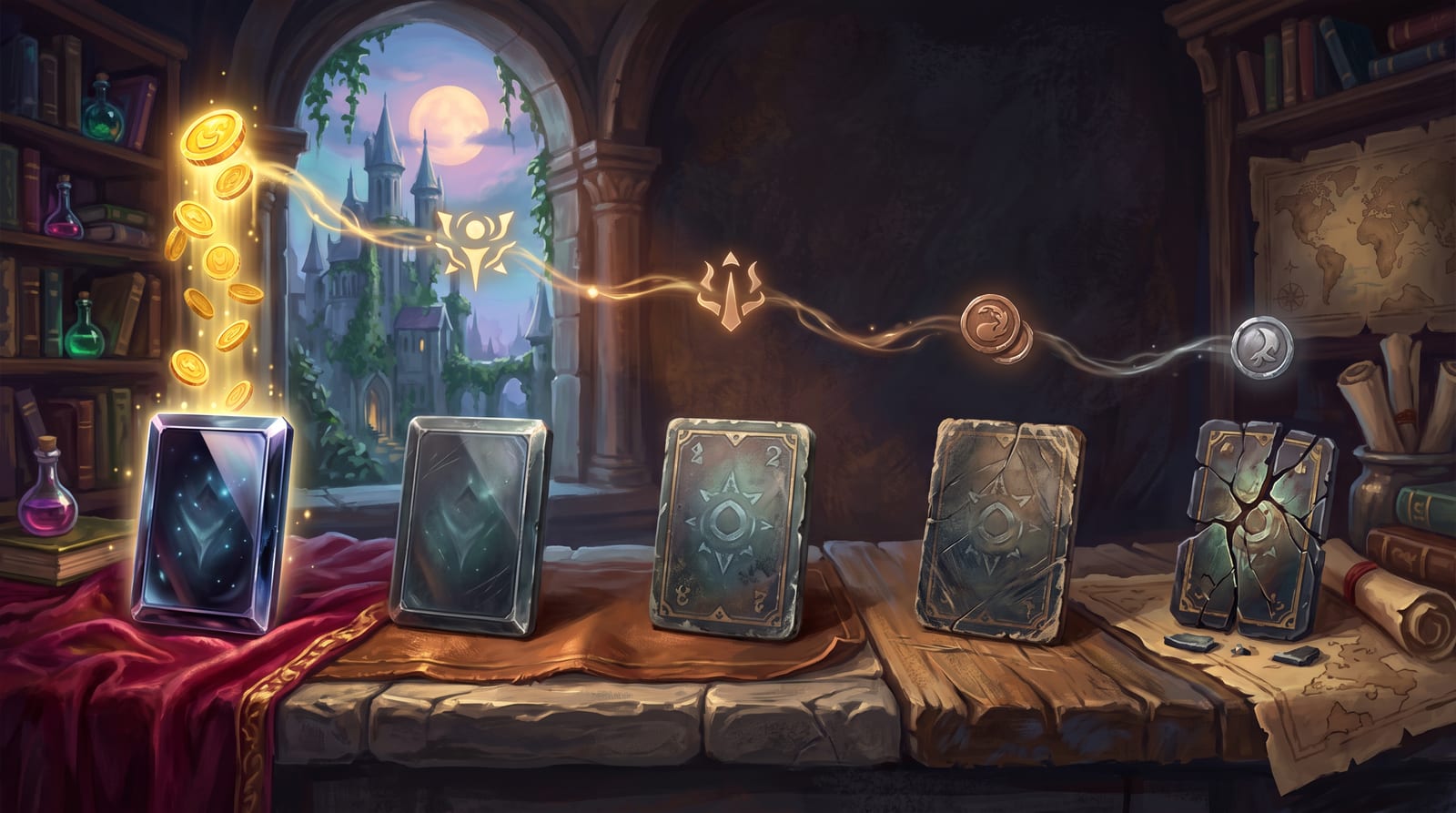
Why MTG card condition is its own language
Every price tag on a Magic card assumes a condition, and if you don't know your card's grade, you don't actually know what it's worth. MTG card condition is judged on one of two widely used scales: TCGplayer's five-tier system (Near Mint through Damaged) and Cardmarket's seven-tier European scale. Here's exactly how each grade is defined, how much it moves price, and how to grade your own cards without guessing.
The TCGplayer condition grades: Near Mint to Damaged
TCGplayer, the biggest US marketplace for singles, uses five grades. Sellers assign one to every listing, and buyers filter by it, so getting this right is the difference between a fair sale and a return request.
| Grade | What it looks like |
|---|---|
| Near Mint (NM) | Looks close to fresh out of the pack. At most a couple of tiny, barely visible marks. No bends, no creases, no scratches you can see without tilting the card under light. |
| Lightly Played (LP) | Light handling wear: minor edge or corner softening, maybe a faint scuff. Still presentable in a binder, but a careful look front and back gives it away. |
| Moderately Played (MP) | Wear you can spot without squinting: border whitening, rounded corners, visible scratching or scuffing, sometimes a light crease. |
| Heavily Played (HP) | Major wear all over: heavy whitening, damaged corners, noticeable creases or bends. Still one piece, still sleeve-legal for most stores. |
| Damaged (DMG) | Wear beyond the categories above: tears, water damage, heavy bending, writing, or missing pieces. Often not accepted at sanctioned events. |
TCGplayer publishes the full imperfection breakdown in its own card conditioning guide, worth a skim before you list anything for the first time.
The Cardmarket condition grades: Mint to Poor
Cardmarket, the dominant marketplace in Europe, splits condition into seven grades instead of five. The extra granularity matters most in the middle of the scale, where TCGplayer's Lightly Played covers ground that Cardmarket splits into two separate tiers.
| Grade | What it looks like |
|---|---|
| Mint (M) | Perfect, no exceptions. Rarely used for singles that have left a pack; mostly reserved for sealed product. |
| Near Mint (NM) | Tiny, near-invisible imperfections only. The default grade for a card that's been sleeved since it was pulled. |
| Excellent (EX) | Light wear that shows up on close inspection, usually a couple of small white spots at the corners or border. |
| Good (GD) | Wear visible all around the card: whitening, minor scratches, sometimes light surface dirt. |
| Light Played (LP) | Meaningfully played but still tournament-legal in a sleeve. Clear whitening, possible light scratches. |
| Played (PL) | Substantial wear: creasing, dinging, scuffing beyond what Light Played allows. |
| Poor (PO) | Severe damage: visible bends, tears, or a missing piece. Not usable in official tournaments. |
Cardmarket's own definitions live on its Card Condition help page, which is the reference sellers on that platform are expected to follow.
TCGplayer vs Cardmarket: a rough conversion
The two scales were built independently, so there's no exact one-to-one match. This is a working approximation players use to translate between listings, not an official conversion chart from either platform.
- TCGplayer Near Mint roughly spans Cardmarket Mint through Near Mint.
- TCGplayer Lightly Played roughly spans Cardmarket Excellent through Good.
- TCGplayer Moderately Played roughly lines up with Cardmarket Light Played.
- TCGplayer Heavily Played roughly lines up with Cardmarket Played.
- TCGplayer Damaged roughly lines up with Cardmarket Poor.
When in doubt, grade one step lower rather than higher. Buyers remember an undergraded card fondly; they remember an overgraded one when they leave a review.
How condition changes a card's value
Condition doesn't shave a flat percentage off a card's price, it compounds with rarity and age. A bulk common in Moderately Played condition is still worth a cent whether it's Near Mint or covered in whitening, because the price floor is the same. A copy of a card worth $30 or more tells a different story: the gap between Near Mint and Moderately Played on the same printing is often large enough to matter, and it widens further on older, harder-to-reprint cards where a fresh Near Mint copy is genuinely scarce.
This is why serious sellers grade every card before they list it rather than defaulting everything to Near Mint. An overgraded card gets returned or refunded, which costs more in time and shipping than grading it accurately the first time.
How to grade your own cards at home
Check the four zones: corners, edges, surface, centering
Graders (and buyers) look at the same four things every time. Corners for rounding or dents. Edges for whitening, the chipped look where the colored border wears down to reveal the white card stock underneath. Surface for scratches, scuffs, or indentations. Centering for how evenly the printed border frames the card art, since off-center printing is a factory issue, not wear, but it still affects grade on some scales.
Use real light, not your phone flashlight
Tilt the card under a lamp or daylight at an angle. Scratches and surface texture that are invisible head-on show up immediately once light rakes across the surface. A flat photo under phone flash will make a Lightly Played card look Near Mint every time.
Check the back before you grade the front
Sleeved cards take most of their wear on the back from shuffling against sleeve seams. It's a common mistake to grade the front, which usually looks better, and skip the back entirely. Grade whichever side is worse.
Foils and modern finishes need closer scrutiny
Foil, etched, and other treated finishes show scratches more readily than plain nonfoil cards and can develop a light curl over time. Hold foils at multiple angles under light before you commit to Near Mint; a curl that isn't obvious lying flat becomes obvious the moment you try to sleeve it.
Protecting condition once you've graded it
Grading a card is only useful if it doesn't slide a tier lower before you sell or play it. Sleeve anything worth grading, double-sleeve anything you shuffle often, and store bulk and binders away from direct sunlight and humidity, both of which yellow and warp cards over time. If you're setting up storage from scratch, our guide to organizing your MTG collection covers binders, boxes, and a sorting system that won't fall apart after one draft night.
Tracking condition so it doesn't cost you later
Condition is easy to get right once and then forget. A card graded Near Mint in 2023 might have picked up wear from years of sleeve-shuffling, and if your records don't reflect that, you'll misprice it the day you decide to sell. Grimoria stores condition as a field on every card in your collection, right alongside its printing, finish, and current market price, so a re-grade takes a few seconds instead of a full inventory pass. See how it works in our card condition help guide.
This matters most at the moment you're actually ready to sell. Our breakdown of where to sell MTG cards walks through which platforms pay best for which condition tiers, and accurate grading is what makes those numbers real instead of aspirational. If you're just getting your collection under control in general, start with our overview of what MTG collection management actually involves.
Frequently asked questions
What does Near Mint mean for a Magic card?
Near Mint means the card looks close to fresh out of the pack, with at most a couple of tiny, barely visible marks and no bends, creases, or noticeable scratches. It's the highest grade most players will ever assign to a played card, since true Mint is reserved for sealed product.
Can I still play Lightly Played or Moderately Played cards in tournaments?
Yes. Tournament legality depends on the card being identifiable and not marked in a way that could signal information to opponents, not on cosmetic condition. Lightly Played and Moderately Played cards are legal at sanctioned events as long as they're sleeved and not marked.
How much does condition affect an MTG card's price?
It depends heavily on the card's base value. A bulk card is worth close to nothing regardless of grade, but on cards worth $30 or more, the price gap between Near Mint and Moderately Played can be substantial, and it tends to grow on older or harder-to-find printings.
Do TCGplayer and Cardmarket grade cards the same way?
No. TCGplayer uses five grades from Near Mint to Damaged, while Cardmarket uses seven, from Mint to Poor. There's no official conversion between the two, only rough community approximations, so always check which scale a listing is using before you buy or sell.
What's the fastest way to check a card's condition before selling?
Tilt it under a lamp to catch surface scratches, check the back as carefully as the front since sleeve wear collects there, and compare corners and edges against a card you know is Near Mint. When you're unsure between two grades, list it as the lower one.
Next step
Grading a handful of cards by eye is a five-minute habit. Grading a whole collection by memory is how mispriced cards slip through. Track condition per card as you scan or add cards to your Grimoria collection, and your binder will already know what each card is worth the day you decide to sell.